Why we like the Sun Belt

A recession continues to loom as a real possibility. Inflation keeps hanging around. How are commercial property investors coping with uncertainty? One smart strategy is to focus on the parts of the U.S. that are experiencing economic tailwinds.
Look no further than the Sun Belt. Between a decades-long population bulge and an enduring economic boom, this region has become one of the premier real estate investment centers in the United States. While much of the mainstream media highlights the state of residential home values, new home construction, etc., they often miss the solid commercial/multi-family investment opportunities available for investors.
In one example of the Sun Belt’s allure, Tesla CEO Elon Musk in 2021 made headlines by announcing that he was moving the company’s headquarters from Fremont, California, to Austin, Texas. The announcement touched off the predictable political back-and-forth and Twitter rancor, but it did not come as a surprise to those who have been watching the shift from coastal metros and high-cost states to the Southwest, Southeast, and the rest of the booming region that makes up the southern third of the U.S.
 Ranging from tech-focused Oracle and real estate giant CBRE to the financial services firm Charles Schwab and Wall Street’s Goldman Sachs, companies are either moving headquarters or investing heavily in office space in the Sun Belt. Indeed, some Sun Belt markets are bucking the national trend by posting rising office lease rates and occupancies.
Where is the Sun Belt?
As a point of reference, the Sun Belt refers to the lower third of the continental United States. There is no official definition of the Sun Belt – some demographers say all or part of 13 states are in the region. Others count 18 states in the Sun Belt. The Kinder Institute for Urban Research at Rice University says 36.3 degrees latitude is the dividing line – so by that measure, Richmond, Virginia, lies just north of the Sun Belt, while Nashville, Tennessee, falls just inside the boundary.
We will define the Sun Belt to encompass all or portions of 15 states: Alabama, Arizona, California, Florida, Georgia, Louisiana, Mississippi, Nevada, New Mexico, North Carolina, Oklahoma, South Carolina, Tennessee Texas, and Utah. Within the Sun Belt are six of the 10 largest cities in the U.S.: Los Angeles, Houston, Phoenix, San Antonio, San Diego, and Dallas.
In general, this region combines warm weather with growing populations, expanding economies and comparatively low-tax regulatory climates. Of course, the Sun Belt is such a huge area that there is no one-size-fits-all profile. California, for instance, is in the Sun Belt but is also distinct, set apart by high taxes and a shrinking population -- so the Golden State is not part of our focus. Louisiana and Mississippi, meanwhile, are part of the Sun Belt geographically and politically, but they have not participated fully in the broader region’s economic boom.
With so much buzz around this topic, no one doubts the significance of the economic, political, and cultural power now wielded by these states and cities. So the question to answer for affluent investors is this…
1. Population Growth
One of the most successful 20-century bank robbers, Willie Sutton, stole an estimated $2 million during the 1920s and 1930s. Though he later denied having said it, he is often credited with answering why he robbed banks by with a classic retort: “Because that’s where the money is!”
The simple analysis of that statement is obvious but instructive for today’s commercial real estate investor. The plain fact is that the bulk of the nation’s population growth over the past few decades has occurred in the Sun Belt. Once a mid-sized town in a desert state, Phoenix has seen enormous growth, with a population spike of over 26% since 2000. Florida, once a backwater, has over the decades grown in population to eclipse the Rust Belt states of Illinois, Michigan, Ohio, and Pennsylvania. It is now the nation’s third-largest state, ahead of New York.
These Sun Belt states now contain a whopping 62% of the U.S. population, which is expected to continue to increase, particularly compared to other regions. In the last decade, 75% of the nation’s growth has occurred in the Sun Belt. In fact, on a year-by-year comparison of net population growth (considering out-migration), the Sun Belt has outperformed the Midwest and East in 28 of the last 30 years, according to the Census Bureau.
That growth and expectation of continued expansion have led to a considerable influx of residential housing construction, which in turn has contributed to an explosion of commercial real estate opportunities in the Sun Belt.
It is a simple formula – more people means more commercial and multi-family real estate needs. According to the latest data from the U.S. Census Bureau, seven of the 10 fastest-growing states in the nation from mid-2022 to mid-2023 were in the Sun Belt. The two biggest players are Texas and Florida, the second- and third-largest U.S. states by population.
Evaluating Risk Controls
In addition to conducting the due diligence outlined above, institutional investors also gauge the strength of the sponsor’s risk controls. They assess the sponsor’s approach to identifying, assessing, and mitigating risks associated with their deal – or even, their portfolio of deals, if one specific deal is comingled in a fund with other investments.
This evaluation typically looks at looking at the sponsor’s risk management policies and procedures to ensure they have a systematic approach to identifying, assessing, and managing risks. They will also look to understand how the sponsor identifies and categorizes risks associated with their investments, including market risk, financial risk, and operational risks. Then they will look at the sponsor’s strategies for mitigating identified risks, such as diversification, hedging, insurance, or other risk mitigation techniques.
Finally, an institutional investor will review the sponsor’s process for monitoring and reporting on risks, such as their proposed communication and reporting schedule to investors.
Ultimately, it is not just about how good a sponsor’s deals are; any sponsor can find a good deal and make money. But inevitably, sponsors who do enough deals will encounter challenges and those who have strong risk controls in place will be better positioned to weather the storm than those who fly by the seats of their pants.
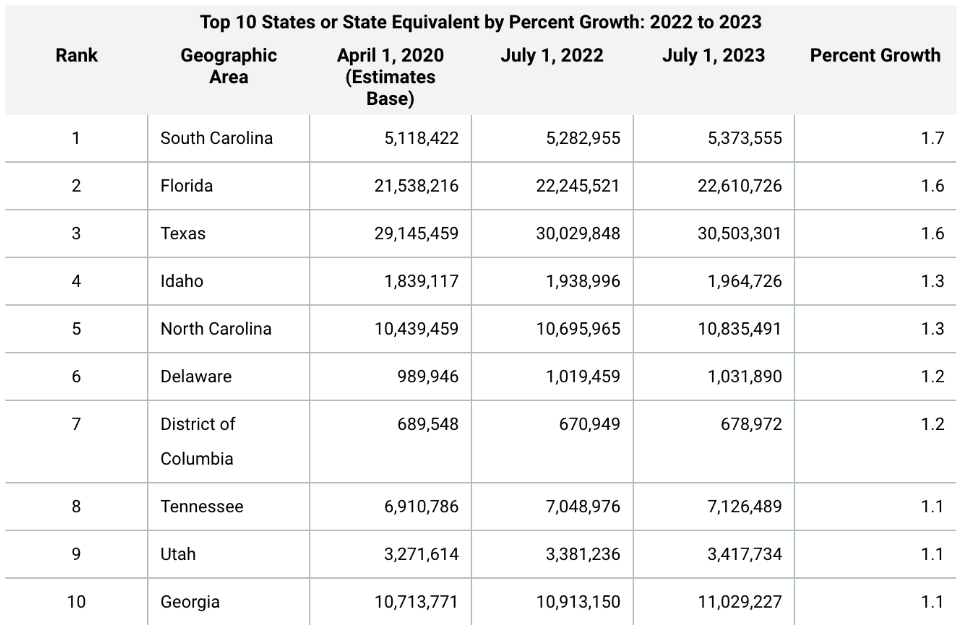
Source- U.S. Census Bureau
2. It’s the Economy…
In addition to seeing a dramatic increase in overall population figures, the Sun Belt has also experienced substantial economic growth. Several factors, a few of which we will cover here, contribute to this trend. But the overall movement of industries, and large population segments, has made the Sun Belt the nation’s most economically prosperous region.
According to a study by the Kinder Institute for Urban Research at Rice University, “of the 10 large MSAs with the greatest GDP growth, seven were in the Sun Belt (and the only non-Sun Belt metros were West Coast cities with large “tech” sectors).” In fact, by one estimate, the Dallas-Fort Worth metro combined to form the 20th-largest economy in the world.
Easing COVID-19 restrictions sooner than some other states has also allowed many Sun Belt states to jump-start their economies as the pandemic waned in early 2022.
As a result, the Sun Belt’s two $1 trillion state economies – Texas and Florida – continue to expand at a rapid rate. According to the U.S. Bureau for Economic Analysis, Texas’ gross domestic product grew by 7.7% annually for the third quarter of 2023, while Florida expanded by 6.1%. Both were well above the national expansion rate of 4.9%.
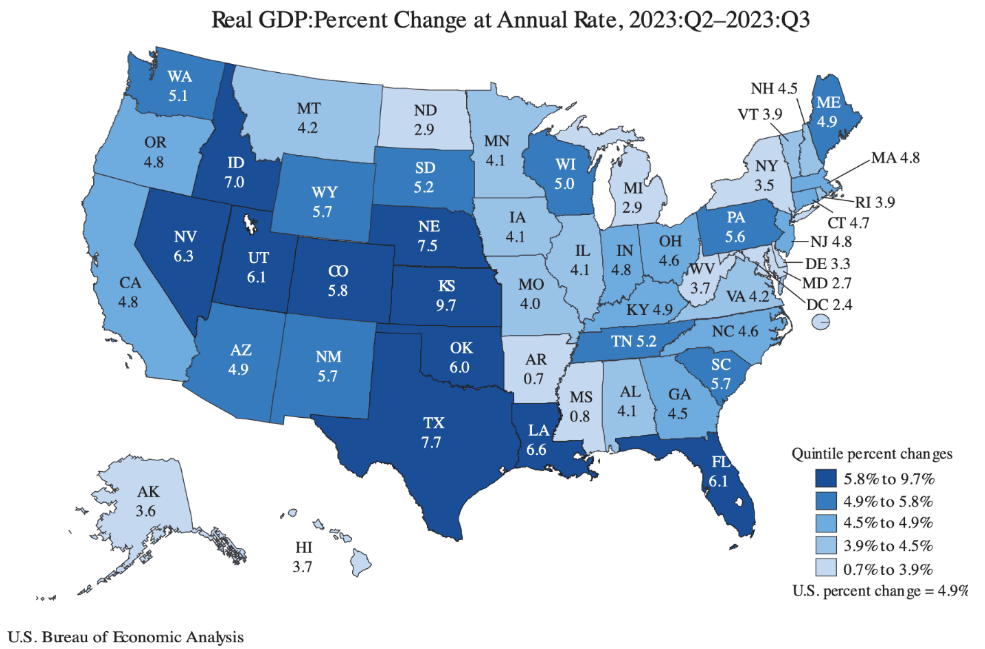
Growing economies signal commercial/multi-family investors that there are opportunities for apartment housing for workers and young families and retail and office needs. Further, research indicates increased activity in the industry and tourism/hotel industries throughout the Sun Belt.
If you are ready to speak with a commercial real estate investment expert about how you can take advantage of opportunities available in several markets or property classes, contact our professional team at Rastegar Property Company. Our data-driven team takes substantial time to ensure our investor partners have the best opportunity to succeed and minimize tax burdens.
3. Job Growth
The onset and duration of the COVID-19 pandemic tested economies throughout the world. Both locally and nationally, leaders were forced to find ways to keep businesses and economies healthy while reducing the spread and severity of the virus. In the U.S., states took varying approaches (to some degree), and after two years, the results in the labor market have been stark. California, New Jersey, and New York had the most stringent lockdown policies, and their unemployment rates surged above 6%. Conversely, Sun Belt metros that focused on keeping economies operating experienced jobless rates that were far lower—Atlanta, Huntsville, Charlotte, and Dallas were among the local job markets that boomed through the pandemic.
Now that the pandemic has faded, the employment trends continue to favor the Sun Belt. Alabama, Florida, South Carolina, and Utah all had unemployment rates of 3% or lower in December 2023, well below the national level of 3.7%, according to the U.S. Bureau of Labor Statistics. Meanwhile, some of the nation’s strongest job growth came in the Sun Belt states of Nevada, Florida, Texas, and South Carolina.
4. Follow the Herd
There is a reason why political leaders in growing Sun Belt states like Florida and Texas have spent significant efforts in the past decade to lure businesses—because it works. High-profile personalities like $100 million podcaster Joe Rogan very publicly moved from Los Angeles to Austin. Growing media companies like The Daily Wire moved to Nashville. And they join a long line of household names moving to or increasing their footprint in the Sun Belt: tech sector giants like Tesla, Oracle, Hewlett Packard, and Dropbox among others.
Amazon has heavily invested in Sun Belt communities, pouring an estimated $10 billion into Texas alone. That same Texas-focused report notes that “Charles Schwab, Deloitte, JP Morgan Chase, Liberty Mutual, McKesson, State Farm, and Toyota have either relocated or significantly expanded their operations.”
 Florida’s effort to entice businesses seems to have benefited in particular from their more relaxed COVID-19 procedures. One report noted that companies were “flocking” to Florida as the state opened up faster and further than other locations.
Major, mid-tier, and start-up companies looking to the Sun Belt for office/retail space mean tremendous opportunities for commercial real estate investors. More companies vying for space should also help push rents/leases higher for property owners.
That analysis is backed up further by Q4 office absorption data coming from major brokerages. Reporting indicates that throughout the south and southwest (the Sun Belt) benefited from less restrictive COVID-19 policies that allowed companies to return to the office sooner or make decisions about future office space sooner.
6. Taxes and Doing Business
Perhaps the most obvious, and one of the most crucial, reasons that individuals and businesses continue to flee high-cost states in favor of the Sun Belt is the promise of lower taxes and cost of living. It is no secret why nearly 700,000 people have left California for Texas since 2010, and 13% of all new Texans are California transplants.
Looking first at individual tax rates (think CEOs and company founders here)—states like Oregon, New York, New Jersey, Massachusetts, and Connecticut have some of the highest state tax rates, while Florida, Tennessee, Texas, and Nevada all have no state income tax, making it extremely attractive for high-income earners to move to the Sun Belt.
The situation is similar for companies as well. California levies an 8.84% top marginal corporate tax rate, New York’s top rate sits at 7.25%, and Illinois’ rate is 9.5%; meanwhile, Florida’s rate is 5.5%, Arizona charges 4.9%, South Carolina 5.0%, and Texas doesn’t charge a corporate tax rate at all (though they do levy a gross receipts tax). The Tax Foundation notes that five Sun Belt states – South Carolina, North Carolina, Tennessee, Florida, Texas, and Alabama – were among the Top 10 in in-migration last year.
5. The Price is Right
Despite all the attention, population growth, and activity in the Sun Belt, prospective homeowners continue to be attracted to the plethora of affordable housing options. A recent report from Extra Space Storage found that the top 13 most affordable cities include Dallas, Huntsville, Memphis, Nashville, Oklahoma City, San Antonio, Tampa, and Tulsa.
That is excellent news for future investment in the Sun Belt, as would-be home buyers facing sticker shock from coastal cities will continue to look south. Additionally, great commercial real estate values are available in Sun Belt metros. Analysis from real estate experts at CBRE notes that eight of the top 10 development opportunity markets are found in the Sun Belt.
Property owners may find adding new and tenant-friendly upgrades and amenities may be a driver in helping companies start to bring employees back to the office. After four full years of working from home, many white-collar employees are reluctant to trade the convenience and perks of working from home for traffic jams and eating their lunch from their desk again.
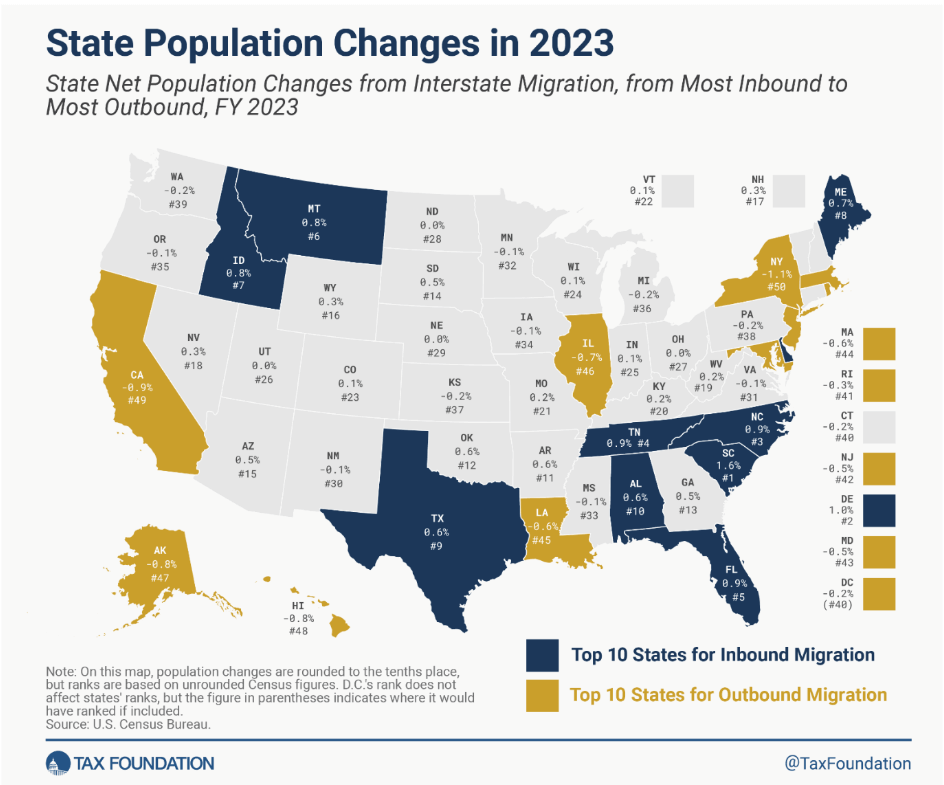
Tax rates are just part of the equation for company decisions on location, of course. Chief Executive attempts to combine all the essential elements to determine the “Best States for Business.” Their list ends up, however, looking very familiar. Four out of the top five are Sun Belt states Texas, Florida, Tennessee, and North Carolina. At the bottom of the list are high-cost, high-tax states like California, New York, Illinois, and New Jersey.
Even companies just getting off the ground are more likely to find favorable conditions in the Sun Belt. The Motley Fool’s ranking of top states for startups includes (in the top 5) Florida, Texas, and Idaho.
Whether it is tax rates, growth opportunities, low costs, or another factor that persuades you, it is clear that Sun Belt commercial real estate provides investors with a variety of ways to add profitable assets to your portfolio, hedge against uncertainty in a rapidly changing marke
Make Your Next Move
The Sun Belt is more than just a destination. It is key to a must-have commercial real estate investment strategy.
Are you ready to learn more about how our Rastegar experts can put our technology-enabled skills to work for you? Get your real estate questions answered. We specialize in recession-resilient commercial property investments and ensure that our investors take advantage of opportunities to minimize tax burdens and increase project return.