How CRE Is Changing

How is commercial real estate changing? The big takeaway is that the outlook is not all doom and gloom. It also is not completely rosy and optimistic. While market trends tended to carry investors either up or down in the past, today's investors can only take what is possible from the market if they know how to manage risk properly. Investors also need to know how rapidly evolving human trends favoring markets where certain characteristics over others are deciding the winners and losers.
The New Rule
While it may seem surprising to some, the new reality of commercial real estate is not necessarily to make money. Yes, profit is always the end game when making any investment. However, the immediate priority for commercial real estate investors navigating any phase of the real estate cycle is to avoid losing money. This is why managing risk is at the forefront of our investment philosophy here at Rastegar.
Having a goal of not losing money does not mean that investors need to be retentive or reactive when it comes to their investments. One strategy to avoid loss without inadvertently avoiding opportunity is to utilize immaculate underwriting practices. Additionally, using a third-party fund administrator puts accountability and controls at the forefront by distancing the vested interest of the sponsor from any conflicts of interest with investors.
 Discernment is also important. Being exuberant about every deal that is presented by a broker is not prudent. While keeping an open mind, it is important to scrutinize the particulars of every single deal regardless of broker promises of a project being worth millions. Always run the numbers through an internal process instead of simply reviewing the data presented to you. What does scrutiny look like in real-world terms?
The end result of taking this prudent, diligent approach through pragmatic underwriting and checks-and-balances means that, here at Rastegar, we take on a small percentage of the projects that are presented to us.
The Stress Test
After running an analysis with our own analysts, plus adding a layer of oversight with a third-party administrator, as we do, who does not hold vested interests in the project, the next step is putting the project particulars through a stress test. If a project passes the test, the next phase involves passing the project over to a second underwriting phase to rake through the details. If there is a high degree of certainty that a business plan can be executed, the project can go forward with approval. If there is any doubt, we pass.
Protecting Investor Capital by Starting with the Exit Plan
When looking at a classic multifamily opportunity, the temptation is to view it through the lens of a cap rate or projected internal rate of return (IRR). A typical syndicator will go through heavy tinkering of net operating income projections by increasing rents by adding value through renovations. Playing with exit timelines and applying aggressive underwriting assumptions can distort projected outcomes to yield the outcome the sponsor wants to see, rather than that most likely to occur. This cannot be an approach that delivers consistent, ongoing successes that can weather all phases of the real estate cycle.
Sponsors like Rastegar work their way backward from multiple exit plans especially on ground-up projects. We consider best, worst, and most likely exit scenarios, stress testing all our assumptions to ensure that even in macroeconomic downturns, and while always hoping for the best, our worst-case scenario is expected to protect investor capital.
With these multiple exit strategies in mind, we have learned that to stay focused on the old cliché of location, location, location, has always served us well. In a situation where values drop because the economy falls into a recession, a good location provides insulation for investors against loss of capital. While we may not make our profit target in these scenarios, we will have done all we can to avoid losing what has already been invested.
Leverage as a Value Mechanism
Leverage (bank debt) is incredibly misunderstood. One hard and fast rule for leverage is to avoid a loan-to-value (LTV) ratio above 65%. The only problem with this rule is that it can be completely unnecessary. It is not unheard of to go as high as 75%, 80%, or 85% depending on the nature of the debt, how the debt is structured, and the terms agreed with the lender.
Indeed, there are actually two ways to look at leverage. The first is loan-to-cost (LTC) ratio that compares the loan amount used to finance the project against the cost to build it. The second is the LTV as discussed. On a cost basis, a project might have 80% to 85% leverage that is perfectly reasonable because for every dollar invested, more than a dollar of value is created. This is true ‘leverage.’
Balancing Construction Risk
One of the biggest risks of ground up construction is what is known as ‘construction risk.’ This is the risk associated with the complexities of building what are incredibly detailed projects with hundreds if not thousands of moving parts, from managing large teams of workers, to examining intricate architectural and engineering plans, to controlling for discrepancies between what is planned on the drawing board with what is found on the ground when construction actually starts.
But what if the best way to avoid construction risk is to avoid taking it on at all?
The way we do this is to identify, utilize, and manage highly credible third-party construction firms that make commitments to deliver on a predetermined timeline with guaranteed budgets. By electing to delegate and manage the challenges of the construction process rather than attempting to execute on the process ourselves, we elevate our position to one of underwriting and management instead of expending our resources on the day-to-day management of contractors and subcontractors.
This ensures that our energies remain focused with our strengths; understanding where opportunities exist, envisioning where value can be extracting, and applying our investment philosophy through careful management of highly capable, skilled, and seasoned professionals who we oversee as they execute to our specifications and plans.
Beyond the Numbers: Remembering That Projects Are for People
Everything discussed in this article up until this point has been focused on our approach to real estate investing by looking at some of the technical aspects of profiting from ground-up real estate development.
While important, this needs to be balanced by an understanding of the humanity behind the markets.
 During the discernment process, it is important to look up from the spreadsheets every so often to remember that real estate essentially comes down to human habits. We are creating homes and apartments where people can live, buildings where people can work, and logistics centers where products are passed from vendor to customer.
Opportunity patterns follow human patterns.
Long before any stress test is put in place, investors ultimately need to make sure that investment ideas that play out beautifully on paper actually reflect human patterns.
Real Estate Investment and Social Evolution: The Next 20 Years
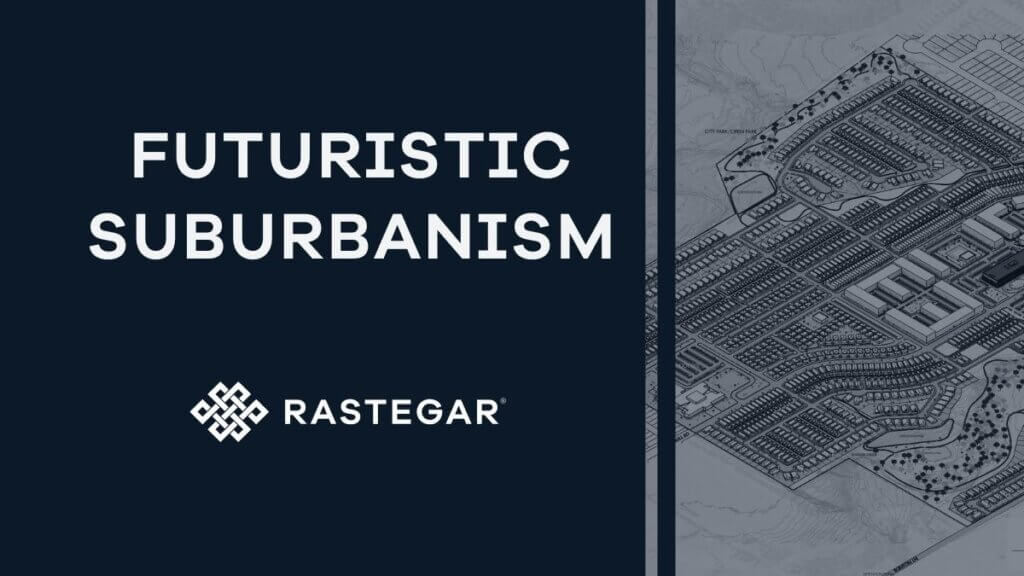
The future of real estate development is responsive. People are increasingly questioning why we are doing things the way they have always been done simply because that is the way they have always been done! Like technology that is ergonomic, real estate is also on its way to being designed for human comfort. While this post is about the future of commercial real estate specifically, there is one point that cannot be overlooked. The driving demand for homes that meet modern needs means that commercial buildings that are developed in places with robust new home construction versus areas that were developed to capacity 50, 60, or 25 years ago are attracting the next generation of workers.
From an architectural perspective, building a home for modern needs can mean pruning living rooms, dining rooms, and other areas of a home that feel like relics of a different era. Developers can actually offer more value to buyers by snipping off unused parts of the traditional layout in order to reduce construction costs or simply redirect square footage to high-usage areas of a home. This is no trivial matter when you consider just how many Americans are being priced out of buying homes.
What is especially interesting is that the future of neighborhood design actually looks a lot like the past of home design. What does this mean? Everyone is growing tired of front-loaded garages and "McMansions." While these styles were once status symbols, they now symbolize vain waste and artificiality to so many people. There is a renewed interest in community-based neighborhoods that might include row homes or more utilitarian designs that are priced for "real" people.
In the next 20 years, the way that people live in the United States is going to change significantly. People want to make their homes more comfortable instead of more "impressive" to the in-laws visiting at the holidays.
Remote work is obviously playing a role in this. For many Americans, homes have taken on office characteristics in the past five years. That has meant using rooms for every purpose other than what they were intended to be used for when a home was built. Using guest bedrooms, basements, or corners of the living room for home offices has left many people feeling distracted and exposed while trying to focus on work. When they try to unplug, their workspace is constantly "there."
Developers need to build homes that honor the new reality that work does not stay at work. Property developers that only develop homes designed for the 1950s-style economy risk only developing homes that appeal to people who were around for the 1950s economy. While primary markets around New York City and Boston are already fully developed with homes that worked in the old economy, secondary markets have the space for future-thinking developments that attract workers.
Commercial Real Estate Investing Is Changing as the World Changes
Who would have ever thought that the smartphone would be a risk to commercial real estate back when the first iPhone was released back in 2007? There is no way around the fact that some businesses and retailers that would have required office spaces a decade ago are being operated completely from digital devices. It does not mean that commercial real estate is dead. It does not mean that retail space is dead. However, these might be tempting theories to follow if you do not understand human behavior.
 To the surprise of many, retail is up both nationally and locally. Convenience fatigue is a real thing. People are tired of staring at their phones while mindlessly scrolling and pressing "buy now." As the novelty of online shopping begins to wear off, more and more people are seeking experiences outside of their homes. Property investors only have to look at what branding experts are doing to know that retail is on an upswing. For example, Kim Kardashian launched her newest best-selling Skims collection at retail locations instead of focusing on online sales. What is old will be new again in the retail space as more and more people begin to value the ability to visit a store, grab coffee with friends, and live in the real world.
The reversion is also coming to commercial spaces. While hybrid work is probably never going away, the inconvenience of convenience is being recognized by many employers. While technology transmits information, it does not actually keep people as connected as they could be. The return-to-office trend is being driven by the recognition of the fact that there is an energy dynamic that is lost when teams are scattered. The tradition of gathering workers together in the same rooms is being embraced because humans coming together "in community" has always been what has driven innovation. This applies even when we are talking about a corporate community.
That does not mean that the reversion back to the traditional in-person work culture will be without challenges. Companies that want to bring workers back to the office actually have to entice them to come for the first time in history. Technology means that a percentage of workers will probably always be able to find remote work. In order to get top-tier talent to come to work in person, companies need to give them a reason to want to come to work. That means high-quality buildings in high-quality settings. This is where everything comes full circle. Are you ready for the big reveal? The future of commercial real estate can actually be summed up in one sentence.
The future of commercial real estate focuses on creating buildings designed for comfort and efficiency in cities where people actually want to work and live. The secondary piece to that is creating these buildings in cities where workers can actually afford to work and live. This solidifies the idea that secondary markets offer the best growth opportunities both at the moment and for the foreseeable future.
Bringing It All Together
Forecasting how commercial real estate is changing does not come down to tracking one metric. It is about looking at human progress to try to identify the markets where the desires of the up-and-coming generation of workers and buyers can be met! This increasingly means the secondary markets that have only started to gain serious traction in the past 10 to five years. Of course, the quintessential secondary market is Austin because it is a tech and cultural hub that does not "price out" buyers the way that primary metro areas do today.