Futuristic Suburbanism

The suburban landscape is in a period of rapid transformation, a process supercharged by the COVID-19 pandemic, related societal shifts, and the ever-growing integration of technology in our daily lives. These changes are becoming more pronounced, with new living patterns taking root, particularly in suburban areas.
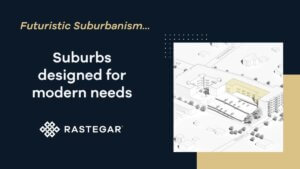 During the pandemic, we saw a mass exodus from dense urban cities to the suburbs. Now, a new generation, facing the financial burdens of student debt while also climbing the professional ladder, is seeking more from life than their predecessors.
The traditional suburban model of identical houses packed closely together no longer appeals to this new generation. Instead, they desire a blend of urban convenience and suburban tranquility, craving communal spaces, green areas, and amenities that foster social interactions.
This sea change in suburban living is being driven by a new, people-centric view of real estate, one adapted to our changing needs and the exponential growth of technology in our lives. Suburban residents want spaces that reflect modern lifestyles, with features like larger kitchens and functional rooms that cater to remote work and digital integration.
However, unlike generations of the past, today’s young professionals have little interest in the rows and rows of cookie cutter houses built on top of each other, the hallmark that defines stereotypical suburbia.
Yes, they are looking to escape the hustle and bustle, and take advantage of more affordable property, but at the same time the young crave interconnected energy. They want the best of both worlds: urban and suburban. They want to congregate amongst each other with access to restaurants, retail stores and other community driven meeting places.
And do not forget their need for ample green space and outdoor recreation, a desire amplified by lifestyle changes brought about by the pandemic and other very Millennial-centric criteria. In fact, a recent survey conducted by Harris Poll survey found that 33% of Millennial home buyers' decision to buy a home was driven chiefly by their dog. Only 25% cited marriage as their top motivator, while 19% of surveyors cited children as their top reason to take the mortgage plunge
They want it all. So, how do we give it to them?
What is Futuristic Suburbanism?
Futuristic Suburbanism is a contemporary urban design concept that emphasizes human-scaled planning and development. It involves walkable blocks and streets, with housing and shopping close to each other, and easy access to public spaces. Unlike traditional suburban models. It integrates the best aspects of city life into suburban areas while preserving the benefits of space and privacy.
 This is a far cry from the cookie-cutter suburbia of the 1950s that might come to mind when thinking of your parents' or grandparents' neighborhoods. Futuristic Suburbanism brings the best parts of city life to the suburbs, without losing the benefits of space and privacy.
Suburbanism centers around a city-style block or square, making it the main hub for community activities. Unlike sprawling strip malls, roads, and endless sprawl, these innovative developments offer a diverse mix of functions designed for those who crave walkability, dynamic social connections, and eminently photogenic environments that can be instantly shared on social media.
The approach to suburban development is becoming increasingly community-driven, focusing on creating environments that are both functional and reflective of local desires. This entails careful planning of roadways, bike lanes, walking paths, pocket parks, and communal spaces to ensure resident safety and health. Collaborative efforts among developers, traffic engineers, financial institutions, and community members are essential in crafting solutions that preserve the unique characteristics of each area, avoiding the uniformity of generic retail centers.
Authentic local features like breweries, outdoor theaters, and farmers' markets are being incorporated to enhance community appeal. The demand for walkable urban environments within suburbs is on the rise, driven by a desire for shorter commutes and easy access to amenities.
This trend is not limited to any specific demographic; a diverse mix of generations, including Gen Z, Millennials, and Baby Boomers, show a strong preference for these mixed-use communities. The "Foot Traffic Ahead 2023" report by Smart Growth America highlights this shift, noting that walkable urban areas, despite constituting only 1.2% of land in the top 35 metros, account for over 19.1% of the national GDP, underscoring the economic vitality and efficiency of walkable environments.
 However, the report also points to the challenges of affordability and accessibility in these areas, suggesting a need for policy reforms to increase the supply of walkable spaces and ensure they benefit a broader spectrum of the population.
“Walkability is not a luxury, but a basic necessity for a thriving urban environment.”
-Jeff Speck, Author of Walkable City: How Downtown Can Save America
Nothing Good Comes Easy
As Futuristic Suburbanism gains prominence, here are a few mission-critical steps for success in the space:
- Preserve Authenticity: A key approach is integrating alternative uses into the development while respecting existing communities. Incorporating workplaces, parks, farmer's markets, entertainment areas, and similar community-focused amenities ensures the new development enriches the local culture. Thoughtful inclusion of these elements makes it a welcoming space for diverse groups without undermining their established cultural identity.
- Stay Connected with the Community: Effective mixed-use developments require leaders who are in tune with local needs and actively listen to community feedback. This is crucial in smaller towns, where residents often have a strong interest and involvement in new developments affecting their area.
- Understand the Unique Deal Structure Approach: While horizontal real estate developments are more user-friendly and less costly to build, most capital sources still prefer to focus on a single use. While mixed-use developments are more difficult to regulate, one possible solution is to secure individual deals to add to the master development. Master developers can bring in other developers that have specific expertise in their asset classes, and they have relationships with their own banks to obtain financing. This also leaves room for greater flexibility for future development.
- Phase it Out: For horizontal mixed-use development, flexibility is key. The plan needs to accommodate potential changes in the market. Setting up the plan in phases allows for potential changes in the space as the marketplace evolves. The priority should be to have the right combination of uses, not the timing of full project completion.
- Create Successful Retail Spaces: A thriving retail center requires adequate population density. To minimize risks, using precise consumer data can guide the selection of retail options for mixed-use developments. Balancing between popular national retailers and unique local shops is essential; too much reliance on national chains can diminish the space's distinctiveness. Additionally, understanding and incorporating the community's ethnic diversity into the retail mix can further tailor the development to local preferences and needs.
- Addressing Parking in Mixed-Use Developments: The high costs associated with structured parking can significantly impact the viability of mixed-use projects. While these developments aim to reduce car dependency by promoting walkability, parking remains essential for their success and often requires public financing. Public entities, recognizing the benefits these retail centers bring to their areas, are typically willing to assist with funding and financial challenges.
To further mitigate risk, considering a tiered parking system where premium spots near entrances are paid can be effective. Market preferences do vary; suburban residents may initially resist paying for parking compared to urbanites, but introducing technology for payment can ease this transition. Implementing a program offering the first 90 minutes free in less convenient spots can accommodate quick visits, balancing the need for revenue with customer convenience.
In an era where numerous factors divide us, our priority should be to unite communities through dynamic, walkable, tech-enabled, and secure spaces. Successful mixed-use projects across the nation have shown it's feasible to achieve this unity while offering a diverse mix of tenants that blend authenticity with financial stability.
By adopting a phased development approach that adapts organically to market trends and by paying close attention to data and customer feedback, we can breathe new life into the American commercial real estate landscape.